

A boarding school — a distinctive environment for growth
British boarding schools represent one of the strongest educational systems in the world. For several centuries they have shaped leaders, scientists and statesmen. The United Kingdom holds one of the highest numbers of Nobel laureates globally — and this is no coincidence, but the result of a systematic approach to education.
Choosing a boarding school, however, is not simply choosing a prestigious institution. It is choosing the environment in which your child will spend several formative years — an environment that shapes character, habits, social circles and academic foundations for decades to come.
School placement for your child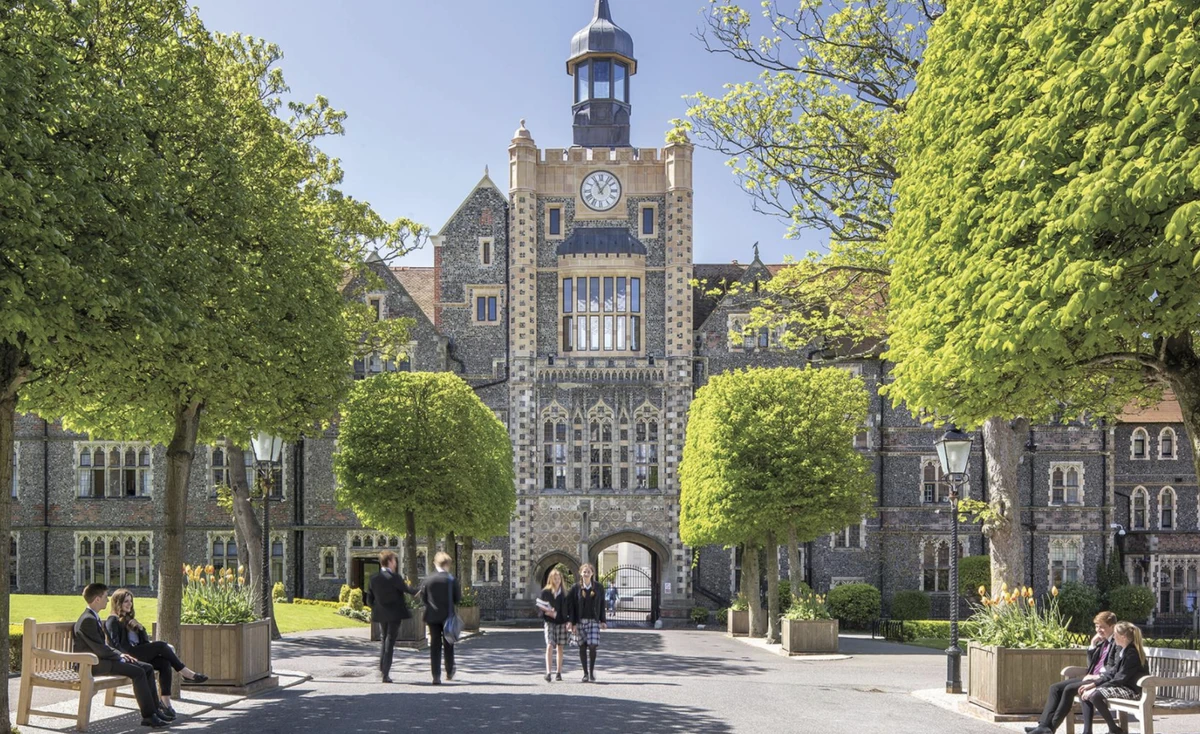
Why families choose British boarding schools
Academic excellence and a clear path to top universities
International environment and a motivated peer community
Full immersion in the English language
Development of independence and character
Sport, music, drama and arts at a professional level
Teachers who are practitioners with real expertise in their fields
Information about specific LIA partner schools can be found in the School Placement & Admissions section.
Schools we work with
Years of partnership with leading British boarding schools across the country.

Eton College
One of the most prestigious schools in the world. Windsor, Berkshire. Boys only, ages 13–18.

Brighton College
An innovative co-educational school with a strong academic programme and vibrant co-curricular life.

Clifton College
A prestigious co-educational school in Bristol with strong traditions and a modern approach to education.

Haileybury
Co-educational school in Hertfordshire with strong international programmes, IB and A-Levels.

King's School Canterbury
One of the oldest schools in the world (founded 597 AD). Exceptional academic and cultural standards.

Queen Ethelburga's Collegiate
Co-educational boarding school in Yorkshire. Broad curriculum, strong support for international students.

St Edward's School
Co-educational boarding school in Oxford with strong academic results and a rich co-curricular life.

Malvern College
Co-educational school in Worcestershire with strong academic and sporting programmes, IB and A-Level.

Cardiff Sixth Form College
One of the UK's leading Sixth Form colleges. Strong university preparation, IB and A-Level.
A British boarding school — a unique educational institution
At the heart of it all is a distinctive environment. Selective admissions create a motivated community where respect, humility and the ability to work in a team are genuinely valued.
Academic Excellence
Small classes of 8–15 pupils, highly qualified teachers — often with academic or professional experience in their field.
Pathway to Top Universities
Graduates gain places at Oxford, Cambridge, LSE, Imperial, UCL and leading US universities at significantly higher rates than those from other schools.
Peer Environment
Your child lives and studies among motivated pupils from around the world. The environment shapes ambitions, behaviour and attitude to learning.
Character Formation
Studying at a boarding school develops independence, resilience, emotional intelligence and a sense of responsibility. An environment in which children genuinely grow.
Native-Level English
Complete immersion in the language. Children who join at 11–13 speak fluent, confident English by the time they are 18.
Holistic Development
Sport, music, drama, art and debating are an integral part of school life, supported by professional facilities, theatres, labs and studios.
Practitioner Teachers
Teachers are not merely educators — they are practitioners: professional athletes, artists and scientists. Children learn from people who have achieved real results.
Independence and Stability
Most leading schools are not-for-profit organisations. All resources are reinvested in the school and its pupils, ensuring consistent quality over decades.
Types of boarding schools: key distinctions
Before choosing a specific school, it is important to understand what types exist and how they differ.
Co-educational
Boys and girls are taught together. The majority of modern boarding schools are co-ed. Real life works the same way, and co-education is the best preparation for it.
Single-sex
Separate education for boys or girls. About 20% of UK independent schools, yet many of the historically leading institutions are single-sex. Pupils tend to focus more on academics with less social distraction.
Prep School / Junior School
Ages 7–13
A preparatory stage that leads into Senior School.
Senior School
Ages 11 or 13–18
The main stage, covering a full academic cycle: GCSE, A-Level or IB.
Sixth Form College
Ages 16–18/19
Specialist institutions offering A-Level, IB, BTEC and Foundation Year programmes for university entry.
Highly Academic Schools
Maximum focus on results, strong competition, excellent preparation for top universities.
All-round Schools
A balanced approach to academics, sport, arts and social life. Ideal for children with broad interests.
Creative / Sporting Focus
Specialisms include drama, music, fine art, football, equestrian sports and other disciplines.
Learning Support
For children with dyslexia, ADHD or other additional needs. The UK has a highly developed and well-organised system for supporting such pupils.
How the academic system works in a British boarding school
The British system differs from the familiar structure of most school systems. It comprises several stages — each requires understanding.
Key Stage 3
The first years in Senior School. A broad curriculum: English, Maths, Sciences, History, Geography, Modern Languages, Art, Technology and Physical Education. The goal is a wide foundation and identifying each child's strengths. The stage ends with internal school examinations that inform decisions about GCSE subject choices.
GCSE — General Certificate of Secondary Education
National examinations taken by all British schoolchildren. Pupils choose 8–10 subjects: some compulsory (English Language, English Literature, Mathematics), the rest by choice.
Grades run from 9 (highest) to 1 (lowest). GCSE subject choices affect A-Level options — certain subjects require a specific GCSE grade as a prerequisite.
Sixth Form: choosing a programme
The most strategically important stage. Grades achieved here form the basis of university applications.
Academic Programme
In-depth study of 3–4 subjects. Grades: A* to E. Recognised by all British universities. Best suited to pupils with clear academic interests.
International Baccalaureate
6 subjects + Theory of Knowledge, Extended Essay, CAS. Maximum score: 45. Leading UK universities require 38–42. Recognised in the US and across Europe.
Vocational Pathway
Coursework-based rather than examinations. Grades: Distinction / Merit / Pass. Accepted by many UK universities, particularly for applied programmes.
UCAS and university applications
UCAS is the centralised application system. Pupils apply to up to 5 programmes. The deadline for Oxbridge and Medicine is October of the penultimate year; for all others — January of the final year.
Personal Statements, entrance tests and interview preparation all require strategic planning at least a year before the deadline. Places at top schools are often filled 2–3 years in advance.
What life is like in a British boarding school
Many parents wonder: how will my child cope living away from home? What actually happens inside a boarding school every day?
Daily Structure
Wake-up, breakfast, morning lessons, lunch, afternoon classes or free time, sport or activities, dinner, evening prep, lights out. A clear timetable builds discipline and healthy routines.
The House System
Every pupil belongs to a house — a residential unit of 30–60 pupils of mixed ages. The Housemaster or Housemistress is responsible for everyone's wellbeing, fostering a sense of belonging and community support.
Pastoral Care
Every accredited school has tutors, counsellors and clear protocols for emotional wellbeing. If a child is struggling — it is noticed and addressed promptly.
Exeats and Half-term
Several times each term there are exeat weekends (2–3 days). Mid-term there is half-term (1–2 weeks). During these periods pupils travel home or stay with host families.
Safety
Gated campuses with access control, CCTV and clear rules about leaving site. The level of safety is significantly higher than in day schools.
Food
Comprehensive cafeterias with hot meals and fresh produce. Three to four meals per day. Special dietary requirements — vegetarian, religious or medical — are accommodated.
How to find the right boarding school for your child
There is no "best school" in any absolute sense. There is the school that is right for your child.
Academic profile and results
Study the League Tables — rankings by GCSE and A-Level results. Check where graduates go on to study, whether Oxbridge and Russell Group destinations feature. Do not limit yourself to rankings alone.
School size
Smaller schools (200–400 pupils) offer a closer community and more individual attention. Larger schools (800–1,200) provide greater resources, more clubs and a wider range of academic options. There is no right answer — only the right answer for your child.
Proportion of international students
If more than 40–50% of pupils are international, your child risks missing the genuine immersion in British culture. An ideal balance is 20–30% international students.
Specialist provision and co-curricular activities
If your child is passionate about music, drama or a particular sport, look for schools with well-developed facilities in that area.
Location
For full boarders, daily life is centred on the campus. What matters far more than geography is the academic environment, the quality of pastoral support and the overall atmosphere of the school.
Visiting the school
No website or league table replaces a personal visit. Open Days are strongly recommended — ideally with your child. Pay attention to atmosphere: how pupils interact, how teachers speak about their students, whether the community feels genuinely alive.
How admissions to a British boarding school work
The admissions process requires careful planning against firm deadlines. Places at top schools fill up 2–3 years in advance.
Defining criteria and creating a shortlist
Based on age, academic level, interests and family budget, a list of 5–8 schools for consideration is drawn up.
Requesting information and registering interest
An enquiry is sent to the school; the school sends a prospectus and Open Day information. A registration fee (£100–£200) is sometimes required at this stage.
Attending an Open Day
A personal visit to the school — ideally with your child. Meetings with the Head, teachers and current pupils. A tour of the campus.
Submitting an application
Completing the registration form. Documents required: school reports for the past 2–3 years, teacher reference letters (2–3 letters), and sometimes a written essay by the child in English.
Entrance examinations
Most schools hold entrance exams: English, Maths, and sometimes a general ability test (CAT). Some programmes also include an interview with the Head or subject teachers.
Offer and accepting a place
The school issues a formal offer. To secure the place, a deposit is required — typically equivalent to one term's fees.
Visa documentation
The school issues a CAS (Confirmation of Acceptance for Studies) — the document required for a UK Student Visa application.
How much does a British boarding school cost?
per year · including full boarding: tuition, accommodation, meals and core school activities
Cost breakdown
What to bear in mind
A school's fees do not always directly reflect the quality of education. Price is influenced by location, demand, facilities and running costs. A more expensive school does not automatically mean a stronger academic environment.
What fees represent is access to an environment, infrastructure and opportunities that shape a child's future.
Why a guardian is an essential part of boarding school life
The school closes for exeat, a flight is cancelled, a report causes concern — in each of these situations, you need someone who can act on the ground.
Choosing the right guardian is as important as choosing the right school.
What families say
Frequently asked questions about boarding schools
Looking for the right boarding school for your child?
We help families navigate the British education system and find a school that truly fits their child — not by ranking, but by character, interests and academic goals.
Tell us about your child and we will arrange a complimentary consultation.